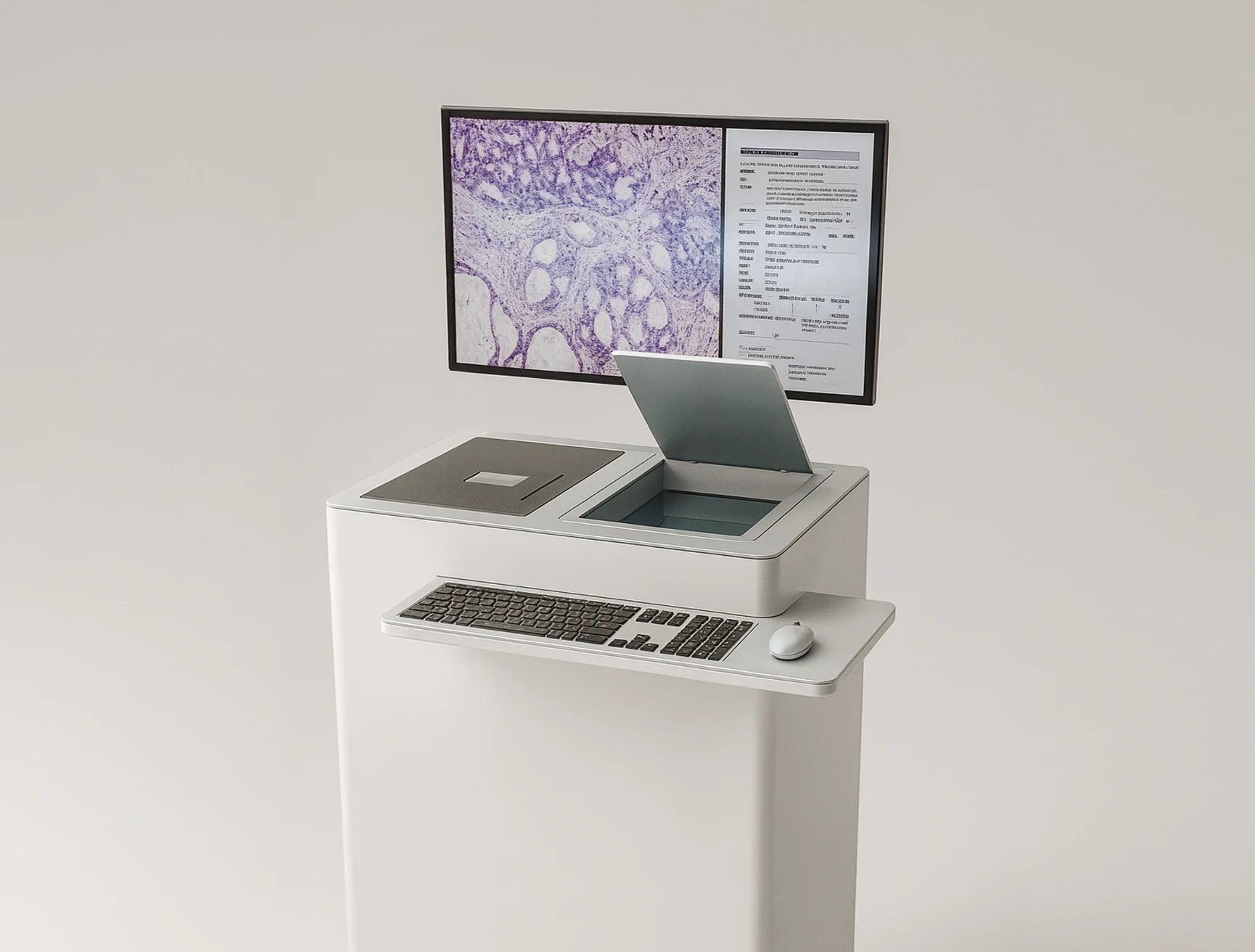
Aquila
-
Large field of view up to several centimeters
-
Submicron spatial resolution
-
3D optical sectioning through several tens of micrometers
-
Real time preview and rapid image acquisition

-
Non-destructive imaging for intact downstream analysis
-
Minimal tissue preparation — no stains or sectioning required
-
Digital output for remote review and AI integration
Features
From overview to subcellular detail
Provides macro-to-micro visualization and multimodal optical signals in a single dataset.
1
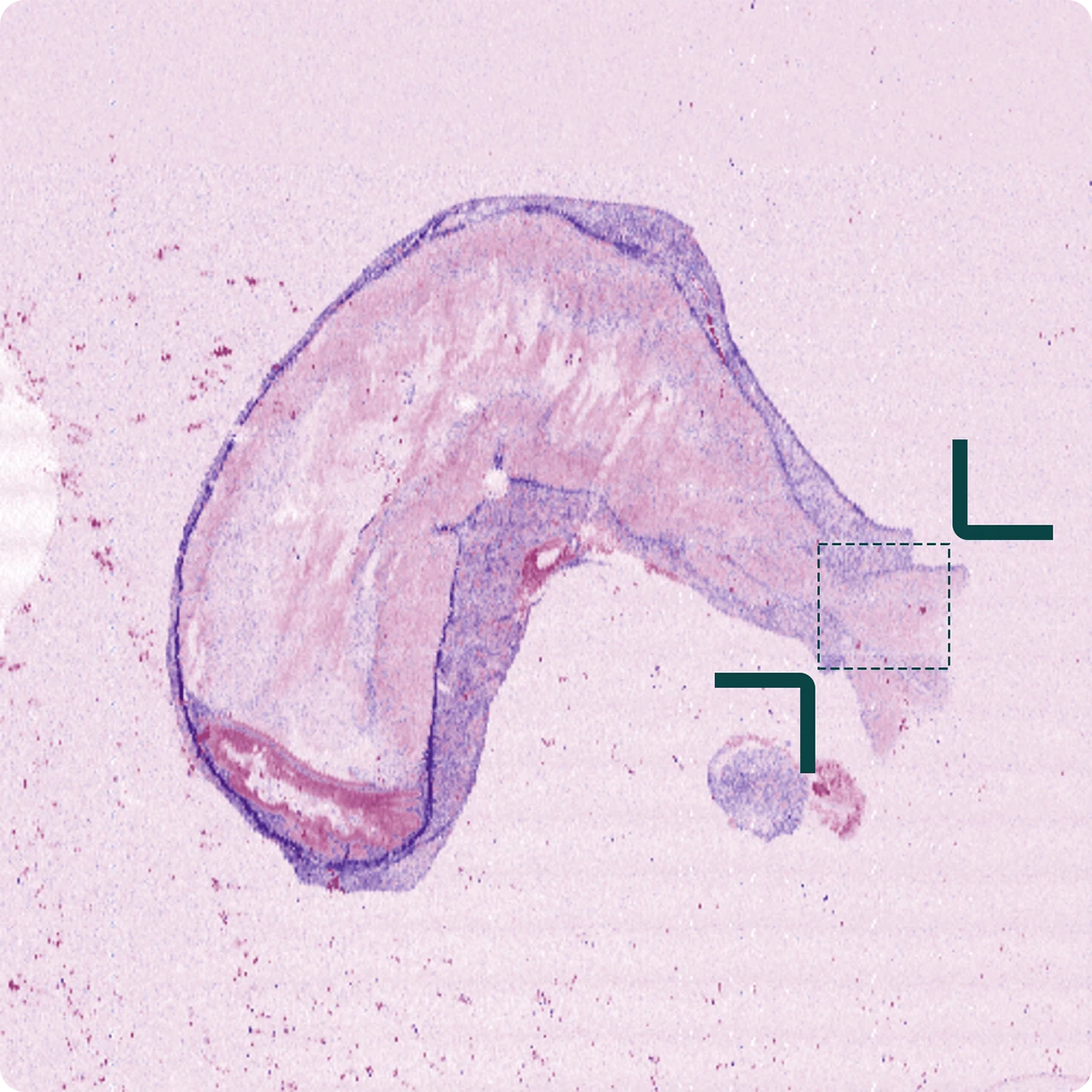
Macro scan or photo
< 5 sec.
2
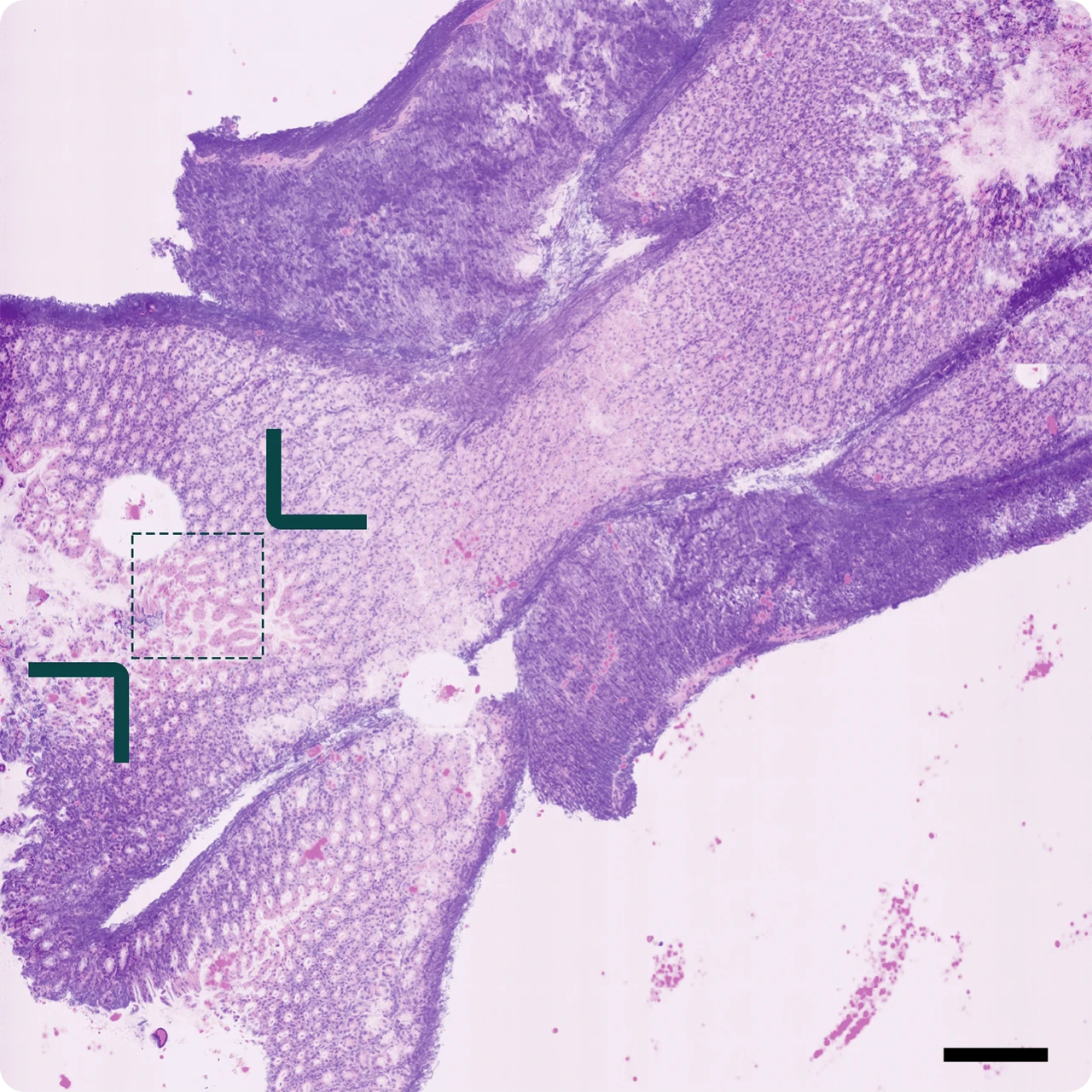
Overview scan for orientation
~min / cm2
3
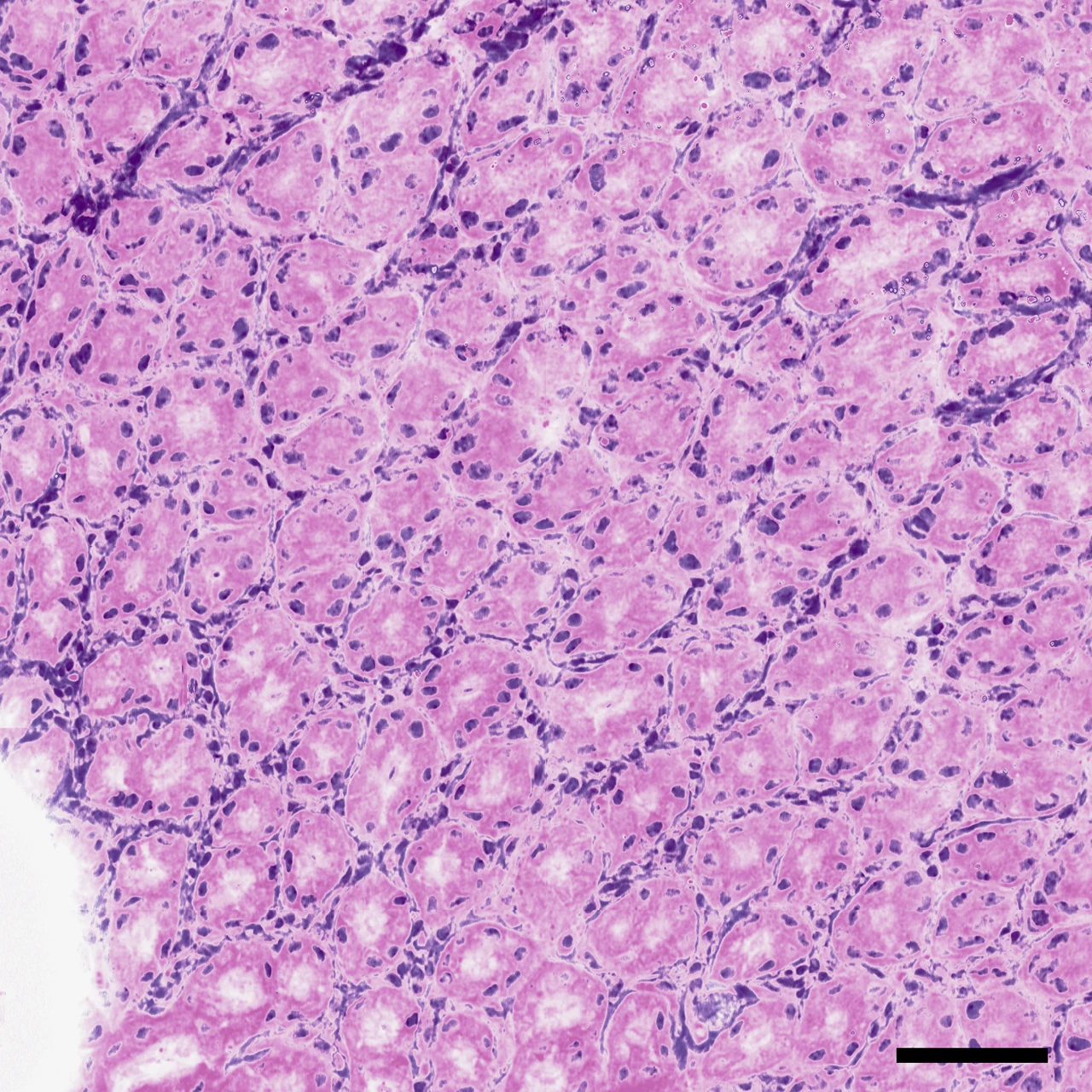
Detailed scan for diagnosis
~mins / mm2
Intuitive sample navigation and multiscale scanning
Aquila combines a large imaging window with submicron spatial resolution, allowing users to navigate seamlessly from a macroscopic overview to cellular detail. Its core capability is the creation of virtual stains in minutes, transforming how tissue can be visualized and assessed directly from fresh, unstained samples. These digital images reproduce the familiar appearance of histological sections and can be reviewed immediately on site or remotely.
In addition, Aquila acquires multimodal optical signals based on Raman scattering, second harmonic generation, and two photon excited fluorescence, providing complementary molecular, structural, and functional information in the same dataset.
Layer insight
Three dimensional insight into tissue architecture
Aquila captures volume stacks through tens of micrometers of tissue, visualizing microstructures in context. The depth information clarifies layer organization and supports biopsy orientation and subsurface–surface correlation. Sample courtesy of D. Kapsokalyvas (Maastricht University)
How it works
Amplifying the molecular fingerprint with multimodal contrast
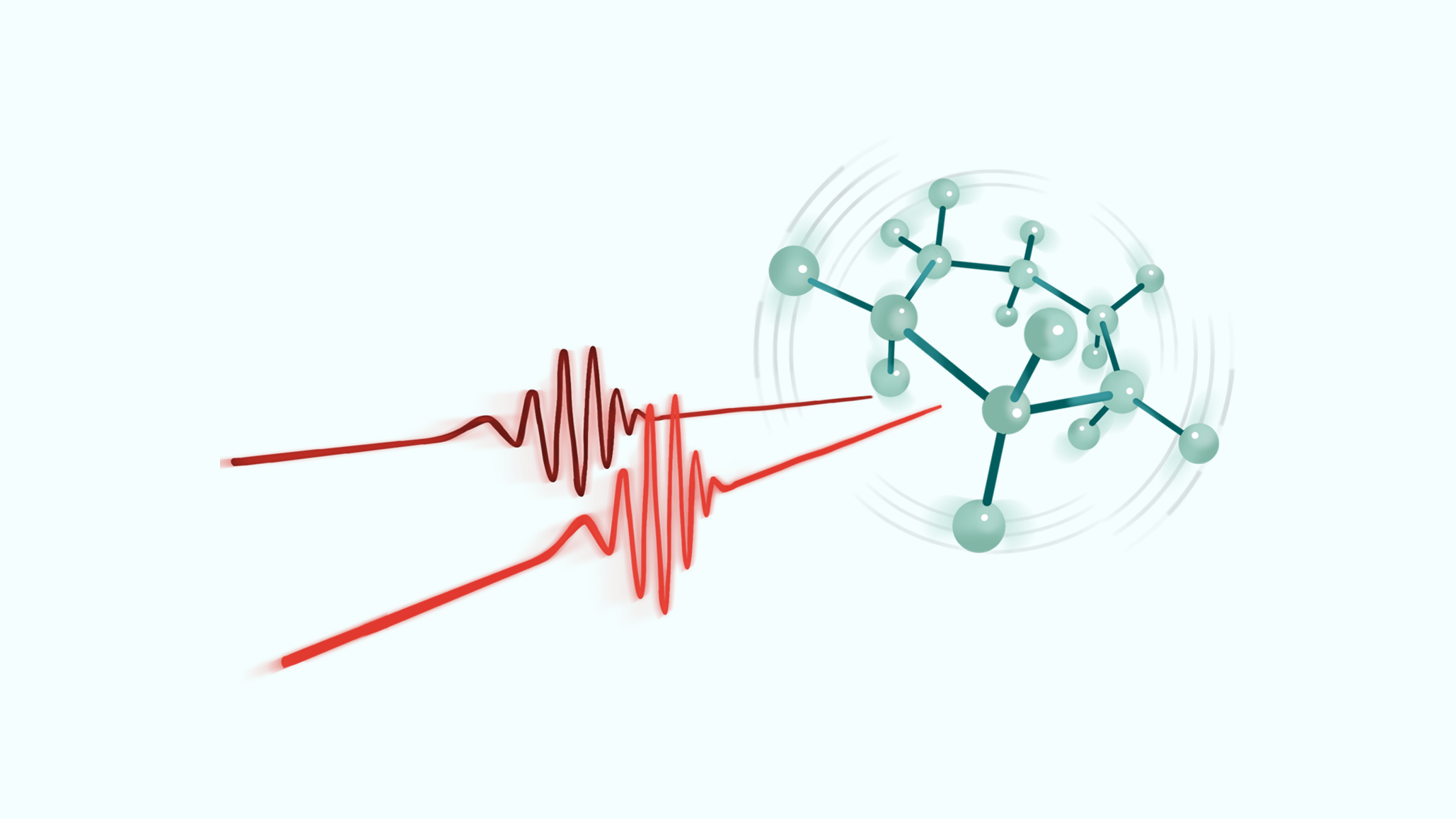
Every molecule carries a unique vibrational fingerprint that reveals its chemical identity. Aquila uses Raman-based imaging to capture this molecular information directly from fresh tissue, without stains or labels, and at imaging speeds suitable for clinical workflows. By combining molecular, structural, and functional contrast in a single scan, Aquila creates a rich, multimodal view of tissue architecture and composition.
Molecular fingerprint
Mapping biochemical organization in its native context
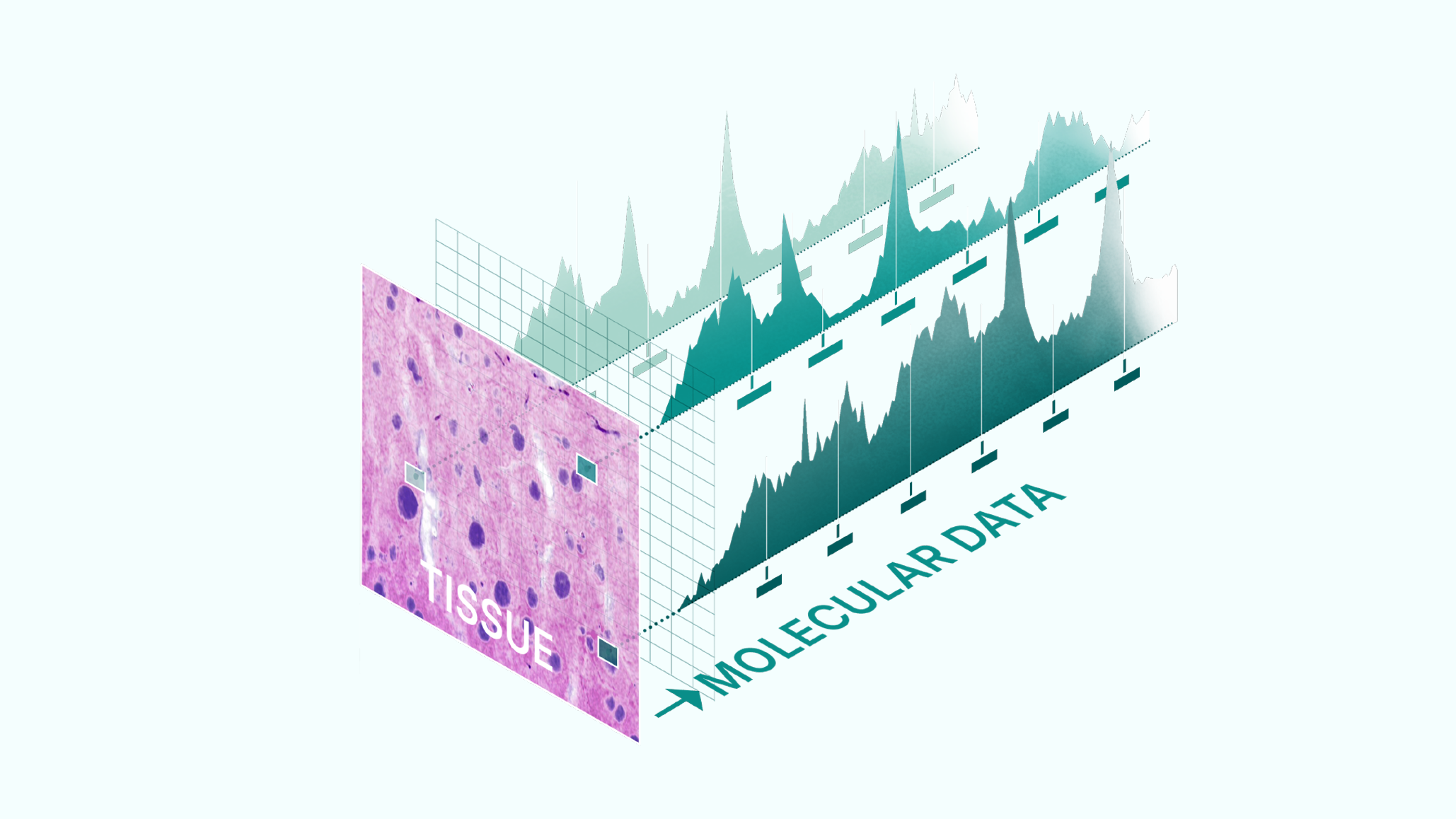
Aquila records Raman spectra per pixel to map proteins, lipids, nucleic acids, and carbohydrates label-free; these measurements expose morpho-molecular changes shaped by genetic and epigenetic factors, strengthening morphological assessment and informing intraoperative decisions and biomarker or AI-based analysis. This novel molecular data layer opens new opportunities for real-time insight into tumor biology and future biomarker discovery.
Digital integration
Integrated Aquila software suite
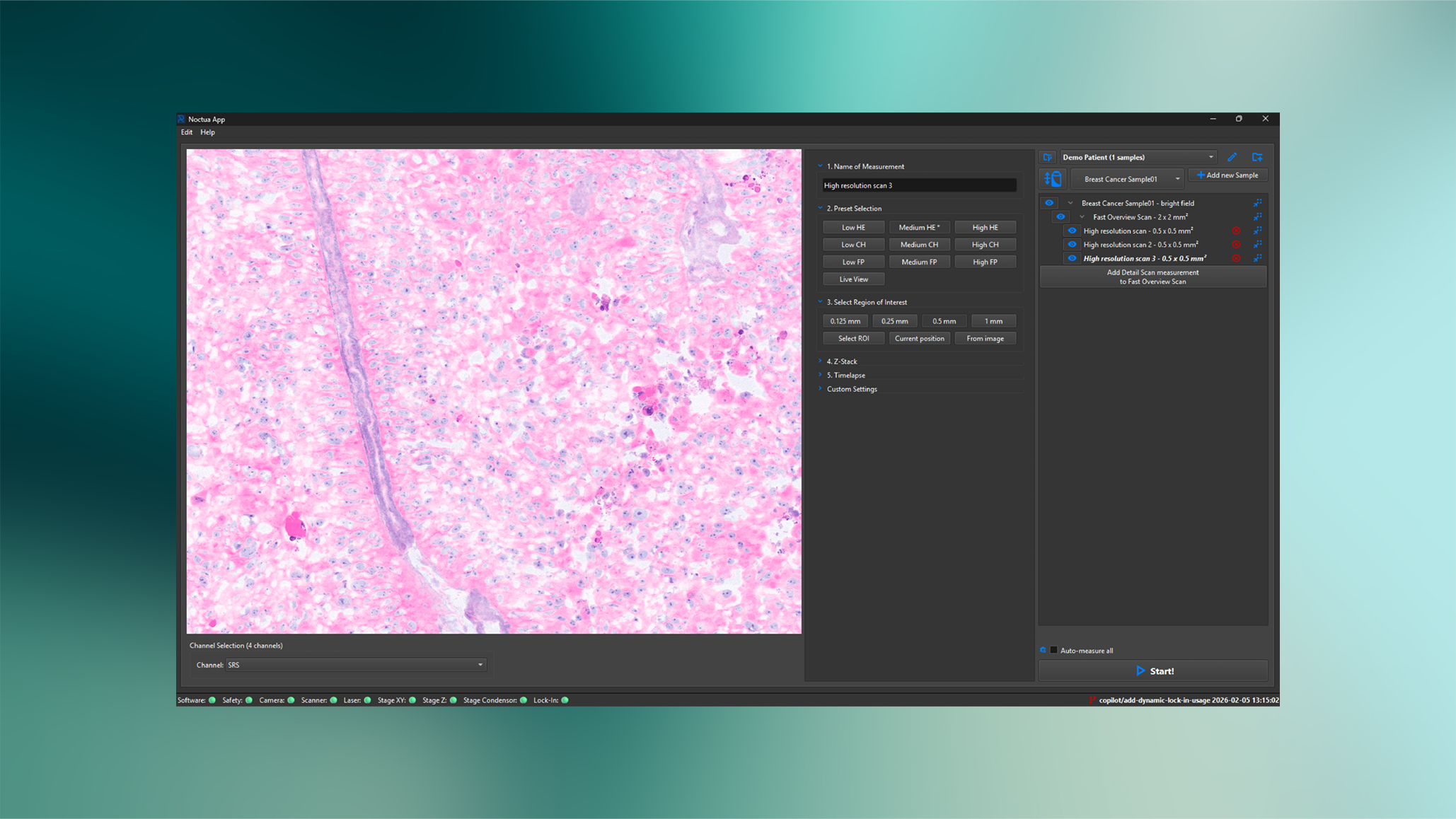
Aquila includes an intuitive software interface for image acquisition, visualization, and data management. Digital results can be reviewed immediately, stored securely, and exported in standard formats for further analysis or AI integration.
Workflow
From sample to screen
A simple four-step process from fresh biopsy to digital visualization within minutes.
1

Fresh sample
Fresh biopsy in PBS to maintain native conditions.
2

Simple mounting
Placed between slide and cover slip for stable imaging.
3

Device loading
Mounted sample is inserted into Aquila for imaging.
4

Instant output
Aquila displays the digital image within minutes.
System design
Seamless workflow integration
Fits naturally into existing clinical infrastructure and ensures smooth deployment without changes to established workflows.

Mobile unit
Mobile system for operating rooms and laboratories.

Plug & play
Standard power connection; no water or alignment needed.

Low effort
Quiet, low maintenance, and immediate readiness.

Ergonomic build
Ergonomic, enclosed design with large touch display.
Contact
FAQ
Your Questions, Answered
Quick answers to common questions.
Headline
Aquila
Longer Headline
Aquila